

May 1, 2026
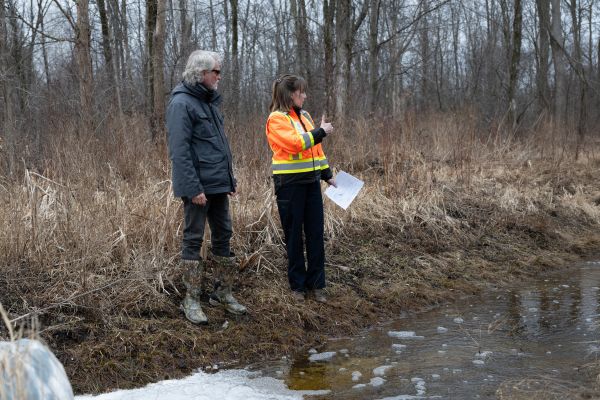
RRCA front-line staff provide user-friendly services to guide property owners with projects requiring a permit under the Conservation Authorities Act.
Planning a construction project close to a river, stream, or wetland? The Raisin Region Conservation Authority (RRCA) is reminding property owners and contractors across its watershed that certain types of development in or near these areas are regulated under the Conservation Authorities Act and may require approval from the RRCA before work begins.
“These regulations are designed to reduce risks to both people and property,” explains Lissa Deslandes, RRCA Regulations Officer. “Securing the appropriate permit is an important part of protecting your project from natural hazards such as flooding and erosion.”
Activities near watercourses or wetlands which may require a permit from the RRCA include constructing buildings or structures, changing existing terrain grade, adding or removing material, and altering the existing channel of a watercourse.
“If you’re unsure whether your project needs approval, simply drop by our office or give us a call,” adds Deslandes. “Our permitting process is simple and accessible, and we’re here to help ensure your project meets all requirements to stay safe and resilient.”
In 2025, the RRCA hit record front-line service standards to support safe and sustainable development, with an average permit turnaround time of five calendar days.
RRCA also offers a property inquiry service for current and prospective landowners, providing valuable information about potential natural hazards that may affect a site.
To learn more, access application forms, or view the current fee schedule, visit rrca.on.ca/Permits or contact the RRCA at (613) 938-3611 or permits@rrca.on.ca.
One of Ontario’s 36 conservation authorities, the RRCA provides its member municipalities with community-led, watershed-based natural resource management, including protection from natural hazards such as flooding and erosion, land stewardship incentives, municipal drinking water source protection, land conservation, and recreation opportunities.